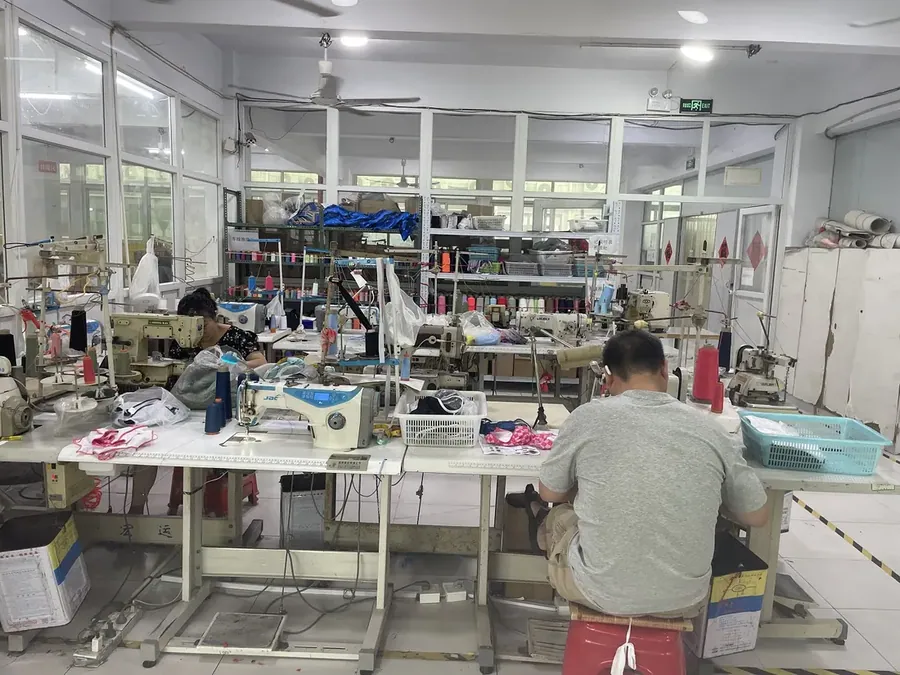
Why Swimwear Samples Keep Failing: Eight Root Causes
Published: 2026-10-20 · Last updated: 2026-10-20
Short answer: samples fail for eight reasons, and seven of them are specification problems rather than factory problems. If your samples keep coming back wrong, the fix is almost always a better tech pack, not a different supplier.
1. The inseam was specified as an overall length
This is the single most common failure in shorts and swimwear. “Length 45 cm” means nothing without saying what it is measured from. An overall length measured from the waistband and an inseam measured from the crotch seam produce two very different garments — often 10–15 cm apart.
Fix: state the inseam as a finished measurement from the crotch seam, and state the outseam separately if you need it. Both, with tolerance.
2. The size chart had no grade rule
A table of 30 numbers for four sizes looks like a specification but is not one. Without the grade rule — how much each point of measure increases per size — a factory cannot extend your chart to a fifth size, and cannot verify that the pattern is internally consistent.
Fix: include the increment per size for each measurement. If you do not have one, ask the factory for their standard grade and approve it explicitly.
3. Colour was given as a name, not a standard
“Navy” is not a colour; it is a category. Two suppliers, and often two dye lots from one supplier, will produce two visibly different navies. That is what makes a sample fail an approval meeting that should have been a formality.
Fix: supply a physical swatch or approve a lab dip before bulk. For a range of coordinated products, approve one physical standard that every item is measured against.
4. Fabric was described by feel, not by number
“Soft, quick-dry, stretchy” cannot be ordered. Composition, weight in gsm, stretch direction and finish can.
Fix: specify composition (e.g. 90% polyester / 10% spandex), weight in gsm, two-way or four-way stretch, and the finish. If you are matching a reference garment, send the physical garment — not a photograph of it.
5. Trims and hardware were left to the factory
Drawcord width, tip finish, eyelet material, zip type, label placement — each is a decision. If you leave them unspecified, you get the factory's default, which is chosen for cost, not for your brand.
Fix: list every trim with a photo or a measurement. Drawcord diameter and tip type in particular change the look substantially.
6. The sample was approved on a mannequin, not a body
Mannequins do not have a seat, a moving hip, or a body that sits down. A garment that looks right on a form can be unwearable — especially fixed-waist and high-rise styles.
Fix: fit on a real person of the target size and move in it. Sit, bend, raise the arms. That is what the sample round is for.
7. Wash and shrinkage were never tested
Cotton and cotton-blend terry can shrink several percent. If nobody washed the sample, the first production run is the first time anyone discovers the finished size is smaller than approved.
Fix: wash the sample to the care instructions, re-measure, and agree a shrinkage tolerance before bulk. This is standard practice, not extra diligence.
8. The brief changed between sampling and bulk
The sample was approved in March; the bulk order is placed in June with “a few small changes”. Those changes are now unapproved. This is a process failure, not a manufacturing one.
Fix: freeze the specification at PP approval. Any change after that is a new sample round — and should be treated as one, with its own timeline.
The pattern behind all eight
| Failure | Root cause |
|---|---|
| 1. Wrong length | Measurement definition |
| 2. Unusable size chart | Missing grade rule |
| 3. Wrong colour | No physical standard |
| 4. Wrong fabric | Described by feel |
| 5. Wrong trims | Unspecified decisions |
| 6. Unwearable fit | No fitting on a body |
| 7. Shrinkage | No wash test |
| 8. Unapproved changes | No spec freeze |
Seven of the eight are specification problems. That is good news: a specification problem is fixable before the next sample, whereas a factory that cannot sew is not.
What a sample round should include
- One style per design, in your target size, made to the tech pack you supplied.
- A measurement report: the factory measures the sample against your spec and reports the variance.
- A physical fitting on a person, with movement.
- A wash test with re-measurement.
- Approval in writing — which becomes the bulk standard.
Sampling takes 7–10 days per style at our factory, and the point of that time is to resolve all eight of the items above before a cutting table is set up.
Summary
If samples keep failing, audit your tech pack before you audit your supplier. Define measurements precisely, attach a grade rule, approve colour physically, specify fabric by number, list every trim, fit on a body, wash it, and freeze the spec at approval. Those eight steps remove almost every reason a sample comes back wrong.
Frequently Asked Questions
Usually because the length was specified as an overall measurement rather than an inseam. An overall length from the waistband and an inseam from the crotch seam can differ by 10-15 cm. Specify the inseam as a finished measurement from the crotch seam, with a tolerance.
Colour names are not standards. Supply a physical swatch or approve a lab dip before bulk, because two dye lots of the same 'navy' can differ visibly.
Yes. Cotton and cotton-blend terry can shrink several percent. Wash the approved sample to the care instructions, re-measure, and agree a tolerance before the bulk run starts.
One or two for a straightforward style. Sampling takes 7–10 days per style. If you need more than two rounds, the problem is usually the specification rather than the factory.
A measurement report against the spec, a fitting on a real body with movement, a wash test with re-measurement, and written approval that becomes the bulk standard.
Ready to Produce Your Own Boardshorts?
Tell us your design, target market and quantity — we will help you plan production with flexible MOQ.
Get a Free Quote